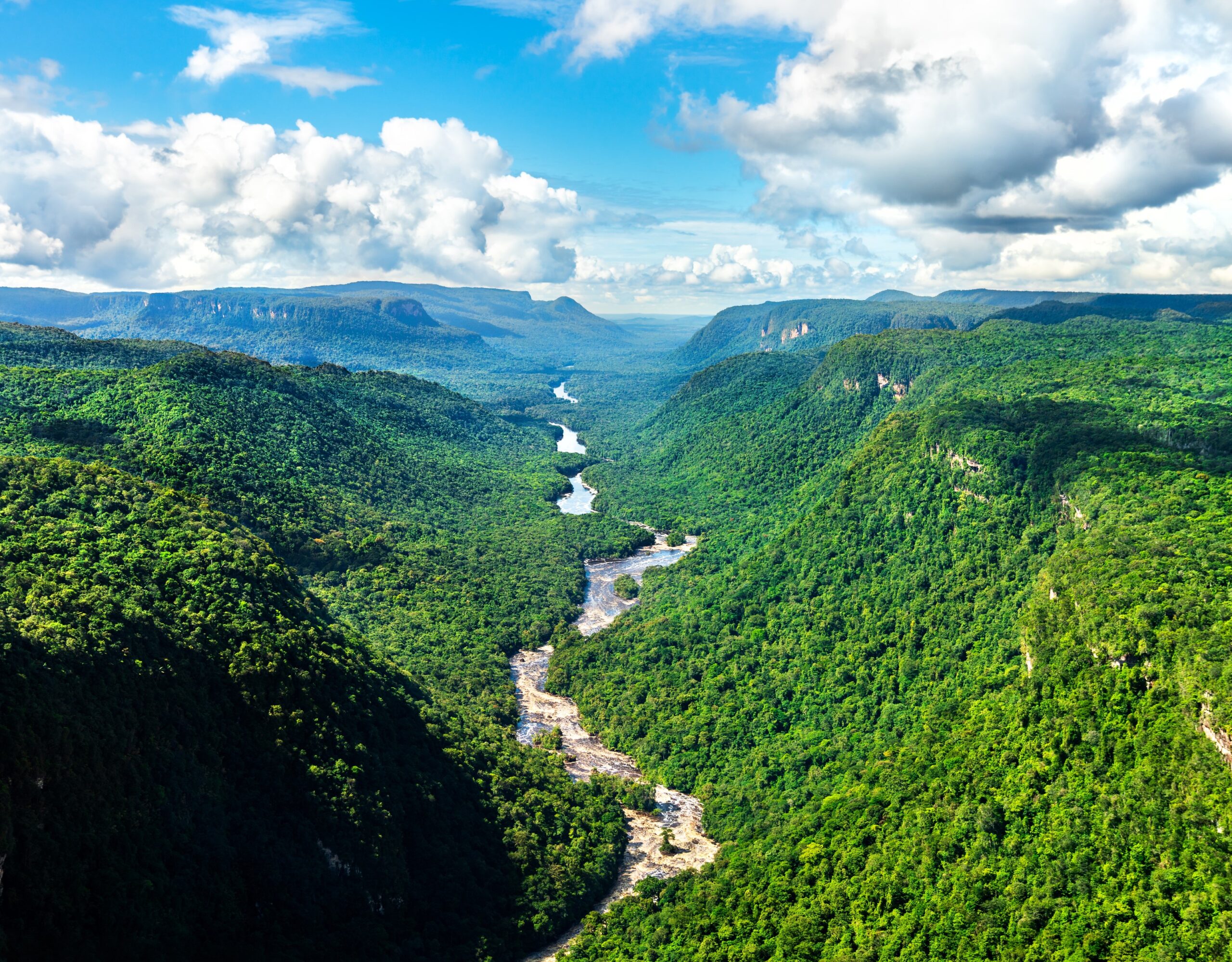
Guyana's coast is unlike any other in South America — 435 kilometres of Atlantic shoreline where wide brown-sugar beaches meet mangrove forests and the famous Georgetown seawall, the evening promenade of the capital. Follow the coast west and the crowds fall away entirely until you reach Shell Beach: a 140-kilometre ribbon of sand built from crushed seashells, one of the last truly wild beaches on the continent.
Shell Beach is sacred ground for sea turtles. Four species — the giant leatherback, green, hawksbill and olive ridley — haul themselves ashore between March and August to nest, guarded by Indigenous conservation rangers who have turned former hunting grounds into one of the Caribbean coast's great conservation stories. Scarlet ibis flare over the mangroves at dusk, and jaguars still leave prints on the tideline at dawn.
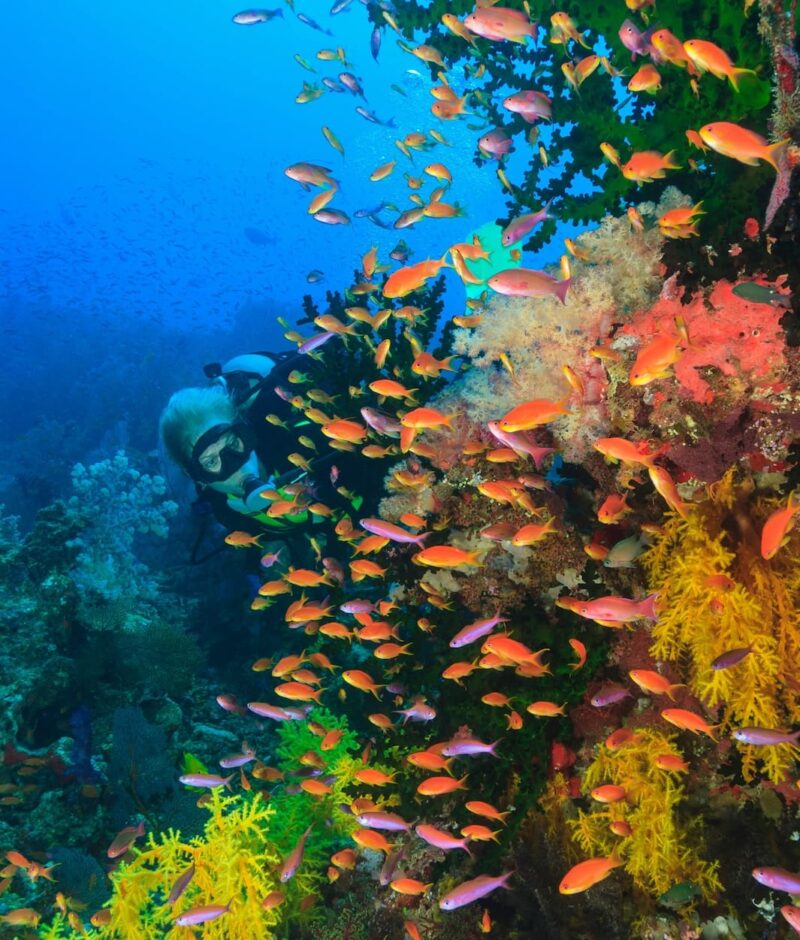
The waters are just as alive. Guyana's rivers and coastal shallows hold more than 800 species of fish — from the arapaima, the world's largest scaled freshwater fish, to lukanani, tarpon and the fierce piranha of the interior rivers. Sport fishermen come for catch-and-release arapaima in the Rupununi; on the coast, seafood lands daily at village markets — gilbaka, butterfish, snapper and shrimp that go straight into curries the same evening.
Drift a blackwater creek where tea-dark water laps white sand, watch the sun fall into the Atlantic from the seawall with a coconut in hand, or camp behind the dunes at Shell Beach under a sky with no lights for a hundred miles. Guyana's shores are not manicured — they are magnificent.